Key Takeaways
- Getting indexed just means Google found your page — ranking is a separate fight that depends on technical SEO, content quality, and links working together.
- Fix the boring stuff first: sitemap, robots.txt, canonical tags, and mobile usability quietly determine whether your indexed pages ever show up for real searches.
- Match search intent instead of stuffing keywords; Google rewards pages that actually answer what someone typed, not pages that repeat “seo marketing” fifty times.
- Expect three to six months before you see honest movement in rankings — anyone promising overnight results in an seo course or sales pitch is selling you a myth.
- Free tools like Google Search Console, GA4, and Yoast tell you what’s broken; paid tools like Surfer help you close the gap once the basics are handled.
- AI Overviews and tools like ChatGPT are changing click behavior, but the fundamentals behind what SEO actually does haven’t disappeared — they’ve just gotten more competitive.
Google indexed your homepage six weeks ago.
Traffic still hasn’t moved. Sound familiar?
Here’s what most founders get wrong: they treat indexing like a finish line. It’s not. It’s the starting gun. Getting a page into Google’s index just means the search engine knows your site exists — it says nothing about whether anyone will ever see it. SEO is the work that happens after that moment, the ongoing push that decides whether your page sits on page 6 or lands in the top 3 results for the terms your customers actually type.
A lot of startup founders assume SEO is a one-time setup task — submit a sitemap, add some meta tags, done. Realistically, that’s maybe 10% of the job. The rest is signals: how Google interprets your content’s relevance, how trustworthy your site looks compared to competitors, and how well your pages answer the exact question someone searched. None of that gets decided at indexing. It gets decided over weeks and months of crawling, comparing, and re-ranking.
So what actually changes once your site is indexed?
Quite a bit, and most of it happens quietly in the background — algorithms scoring your title tags, your internal links, your page speed, your content depth against thousands of competing pages. Some of it you can control directly. Some of it depends on how the market moves. This breakdown walks through exactly what’s happening under the hood, what a specialist or agency is actually doing on your behalf, and why the gap between ‘indexed’ and ‘ranking’ is where most startup marketing budgets either pay off or get wasted.
Indexing Isn’t Ranking: What Happens the Moment Google Finds Your Page
A founder launches a new site, submits it to Search Console, and checks back the next morning expecting traffic. Nothing. That gap between “Google found it” and “Google shows it” trips up almost every new business owner running seo for the first time.
The Crawl-to-Index Pipeline, Explained in Plain English
Here’s the actual sequence: Googlebot crawls your page, reads the content, then decides whether to store it in the index. Crawling isn’t indexing. Indexing isn’t ranking. Three separate steps, three separate outcomes.
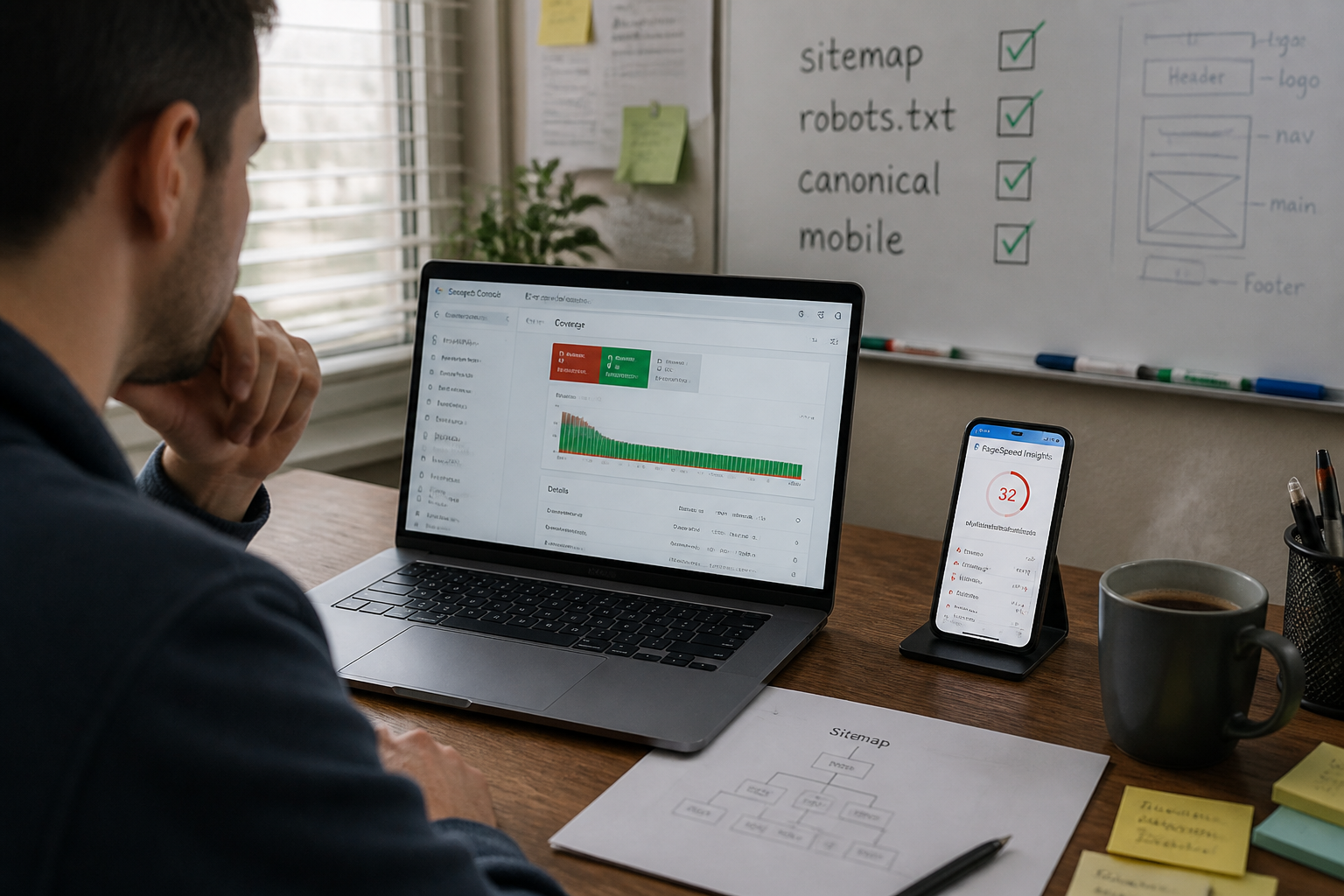
Your sitemap and robots.txt tell crawlers where to look. Google Analytics and Search Console tell you what happened after. But none of that guarantees placement on page one.
Why Being Indexed Doesn’t Mean You’ll Show Up in Search
Once indexed, your page competes against thousands of others targeting the same query. Google’s algorithm weighs relevance, authority, content depth, and user signals before it decides where you land.
Being in the index just means you’re eligible. It’s a starting line, not a finish line. Real ranking work — content quality, backlinks, technical cleanup — happens after that point, not before it.
What Is SEO in Digital Marketing, Really — Beyond the Buzzwords
SEO gets your site found without paying for every click. That’s the whole job. Once Google indexes a page, SEO decides whether that page ever shows up when someone actually searches for it — and whether it earns trust once it does. Plenty of businesses treat indexing as the finish line. It’s not. It’s the starting gate.
SEO vs. Paid Marketing: Different Jobs, Different Timelines
PPC buys attention today. SEO earns it over months. A founder running Google Ads sees traffic the moment budget hits the account; that traffic stops the moment budget runs out. SEO works slower but sticks around — a well-optimized page can keep ranking for years with minimal upkeep. Neither replaces the other; they solve different timing problems.
The Three Pillars: Technical, Content, and Authority
Three things determine whether a page ranks.
First, technical health — crawlability, site speed, mobile usability. Second, content that actually answers the query better than what’s already ranking. Third, authority, built largely through seo backlinks from sites Google already trusts. Skip one pillar and the other two won’t carry the page far.
How Google Search Works Behind the Scenes After Indexing
So your page got indexed. Now what? Getting crawled and stored is just step one — Google still has to decide where you rank, and that’s a different fight entirely. Indexing means Google knows your page exists. Ranking means Google trusts it enough to show it.
Ranking Signals Google Weighs Once Your Page Is in the System
Once you’re in the system, Google runs your page through hundreds of signals: relevance, content depth, page experience, and — this one gets overlooked constantly — link building. Sites with strong external links tend to outrank thin pages with zero backing, even when the content reads about the same.
Other factors matter too: page speed, mobile usability, and how well your content actually answers the query. A page can sit indexed for months and still rank on page 9. That’s not a glitch. That’s Google saying it hasn’t earned trust yet.
Why Your Title Tag and Description Still Matter Post-Index
Here’s what most people miss: your title tag and meta description don’t stop working after indexing. They’re your pitch in the results — the difference between a click and a scroll past.
Organizing Your Website So Google Understands What You Sell
Here’s a number that surprises most founders: Google can crawl a site with 10,000 pages and still miss the 40 that actually make money — if the structure’s a mess. Once your site’s indexed, the real work is telling Google (and users) what matters most and why. That’s structure, not stuffing keywords into a page and hoping.
Sitemap and Robots.txt: Small Files, Big Impact
An XML sitemap is basically a map you hand Google so it doesn’t wander your site guessing. Robots.txt does the opposite job — it blocks crawlers from wasting time on admin pages, checkout carts, or duplicate filters. Get these two files wrong, and Google either skips your best pages or crawls junk instead. Neither file ranks you directly. Both control whether the right pages even get a chance.
Internal Linking as a Signal of Page Importance
Links between your own pages tell Google which ones you consider important — which ones you’d rather quietly ignore. A homepage linking to five service pages signals priority. A blog post linking to a product page passes authority downstream. This same logic explains why backlink sites matter too — external links work the same way, just from outside your domain.
Making Content Google (and Humans) Actually Want to Rank
Here’s an idea most beginners get wrong: getting indexed isn’t the finish line. It’s the starting gun. Once Google can see your page, ranking comes down to whether the content actually earns a spot above competitors — that’s a content problem, not a technical one.
Matching Search Intent Instead of Keyword Stuffing
Cramming a keyword into every sentence used to work. It doesn’t anymore. Google’s systems now judge whether a page satisfies what someone actually wants — a quick answer, a comparison, or a purchase decision. Write for that intent first, keyword density second.
Strong backlink profiles still matter here too. If you want to see who’s already linking to competitors — or check your own gaps — you can find backlinks to my site and use that data to shape topics worth targeting.
Content Freshness and Why Old Blog Posts Lose Ranking
Rankings decay. A blog post from 2021 with outdated stats, dead links, or stale examples slowly loses trust signals. Google rewards pages that get refreshed with current data, updated screenshots, and new internal links. Revisit your top-performing posts every 6-9 months instead of only publishing new ones.
Technical SEO Audit Checklist for a Newly Indexed Site
A founder we’ll call Maya launched her site, watched Google index it within four days, then saw traffic flatline at 12 visits a week. Nothing moved for two months. The problem wasn’t indexing — it was everything underneath it that nobody checked.
Run these checks first: crawl errors in Search Console, orphaned pages with no internal links, broken redirects, and slow load times on mobile. Then build authority the right way; you can discover how to create powerful SEO backlinks instead of buying spammy link packages that tank rankings later.
Fixing Duplicate Content and Canonical Tag Errors
Duplicate content confuses Google about which page deserves ranking credit. WordPress sites are notorious for this — category pages, tag archives, and printer-friendly URLs all clone the same content. Fix it with self-referencing canonical tags on every page, and set preferred URL parameters in your CMS settings.
Mobile Usability Issues That Quietly Kill Rankings
Google indexes the mobile version first.
Text too small to read? Buttons crammed together? These aren’t cosmetic flaws — they’re ranking factors. Test every page with Google’s Mobile-Friendly checker before publishing anything new.
SEO Tools That Show You What’s Working After Indexing
Indexing isn’t the finish line. It’s the starting gun. Once Google Search Console confirms your pages are indexed, the real question becomes: are they ranking, and are people clicking? That’s where tools earn their keep.
Free Tools: Google Search Console, Analytics, and Yoast
Search Console shows impressions, clicks, and average position for every query pulling up your page. Pair it with Google Analytics to see what visitors actually do once they land — do they bounce in 5 seconds or stick around? For WordPress sites, Yoast flags on-page issues like missing meta descriptions or thin content before they hurt rankings.
Paid Tools: Surfer, Ahrefs, and Rank Checkers Worth the Cost
Surfer compares your content against top-ranking pages and tells you what’s missing. Ahrefs digs into backlink profiles, competitor gaps, and keyword difficulty scores that free tools can’t touch. Rank checkers track daily position shifts, which matters when you’re testing changes weekly, not quarterly.
Tools only tell part of the story, though. If you want to boost your SEO with proven backlink building techniques, you’ll need a strategy behind the data — not just dashboards.
Types of SEO You Need Once Your Site Is Live and Indexed
Which type of SEO actually moves the needle once your pages show up in Google? Most founders assume indexing is the finish line. It’s the starting gun.
On-Page SEO vs. Off-Page SEO vs. Local SEO
On-page work covers your titles, headers, and content structure — the stuff you control directly. Off-page is different. It’s about authority signals from outside your own site, and that’s where link building comes in. In fact, how a backlink building service supports startups after technical seo is a question most startups only ask after they’ve already fixed their sitemap and meta tags. Local SEO matters too, but only if you’re chasing map rankings and local searches — most B2B startups skip it entirely.
When International SEO Enters the Picture
International SEO shows up once you’re targeting buyers outside your home country. That means hreflang tags, localized content, and separate keyword research per region. Skip it too early, and you’ll waste budget. Wait too long, and competitors grab the market first. Timing matters here more than people admit.
How Long Until You See Real Movement in Search Results
90 days. That’s how long Google itself says it typically takes before a site sees consistent ranking movement after indexing, according to its own Search Essentials guide. Most founders expect it in two weeks. That gap causes more panic than any algorithm change.
Why Three to Six Months Is the Honest Timeline
Indexing isn’t ranking. Once Google crawls and indexes a page, it still needs to figure out where that page fits against everyone else competing for the same terms. For a new site with thin backlink history, three to six months is realistic — sometimes longer in competitive niches like finance or legal. Google’s own Webmaster blog reinforces this repeatedly: patience beats panic.
Signs Your SEO Strategy Is Actually Working
Don’t just watch rankings. Watch these instead:
- Impressions rising in Search Console before clicks do
- Average position creeping up on target pages
- Indexed page count growing steadily, not stalling
- Organic traffic ticking upward month over month, even slightly
If none of those move by month four, something’s broken — not just slow.
Building an SEO Career: Specialist Salary, Jobs, and Certification Paths
Here’s a myth worth killing: you don’t need a fancy degree to land a good SEO job. Most hiring managers care about proof, not paper — a case study, a ranking screenshot, a client testimonial. That’s it.
SEO Specialist Job Description and What Companies Actually Pay
An SEO specialist job description usually covers keyword research, on-page optimization, technical audits, and reporting. Junior roles start around $45,000. Mid-level specialists with 3-4 years of experience often land $65,000-$80,000. Senior in-house leads or agency directors can clear six figures — especially in competitive markets like finance or SaaS.
Titles vary: SEO analyst, SEO strategist, content optimization specialist. The description rarely changes much between them.
Free and Paid SEO Courses Worth Your Time (Including YouTube)
Google’s own Search Central documentation is free and arguably the best starting point. From there:
- Moz Academy and Ahrefs Academy — free, practical courses
- YouTube — channels covering technical audits, Yoast setup, and WordPress optimization
- SEMrush Academy — free certification exams
- Surfer SEO tutorials — content-scoring workflows
Skip anything promising rankings in a week. That’s not how this works.
Hiring an SEO Agency vs. Doing It Yourself as a Startup
A two-person founding team spends three Saturdays fighting with an XML sitemap and a robots.txt file instead of shipping product. That’s the real trade-off. Once your site is indexed, someone still has to audit titles, fix broken internal links, and track rankings weekly — work that eats hours a solo founder doesn’t have.
What a Marketing Agency Does That a Solo Founder Can’t Scale
A decent SEO marketing agency runs technical audits, keyword tracking, and content production in parallel — not sequentially, like a founder juggling it alone. They’ve got a specialist for on-page work, another for link outreach, and reporting tools that flag issues before Google penalizes you for them. That’s throughput a single person can’t replicate, no matter how many YouTube SEO tutorials they watch.
Red Flags When Vetting an SEO Marketing Agency
Watch for these before signing anything:
- No baseline audit before quoting a price
- Vague monthly reports with no ranking or traffic data
- Guaranteed #1 rankings (nobody controls Google that directly)
- No case studies or verifiable client results
If an agency can’t explain what changes after indexing — and why — walk away.
Is SEO Dead in 2026? What AI Search and ChatGPT Change
SEO isn’t dead. It’s just gotten pickier about who wins. Google’s AI Overviews now answer a chunk of queries directly on the results page, and ChatGPT pulls information without a click at all. That changes what a website has to earn to get noticed — visibility now means being the source AI tools quote, not just the blue link someone clicks.
How AI Overviews Are Reshaping Click-Through Behavior
Click-through rates on informational searches have dropped noticeably since AI Overviews rolled out wider. People get an answer summarized right there. Fewer clicks land on your website, especially for broad, top-of-funnel questions. But transactional and local searches — the ones tied to buying or hiring — still send real traffic. That’s where founders should focus energy.
Why Fundamentals Still Beat Shortcuts, Even With AI Tools
Here’s what most people miss: AI systems still rely on crawlable, well-structured pages to generate answers. Clean titles, clear headers, fast load times — none of that stopped mattering. Businesses chasing shortcuts (spun content, link schemes) get filtered out faster than ever. The ones investing in real technical SEO and genuinely useful content keep showing up, in both traditional rankings and AI-generated answers.
Next Steps: Turning an Indexed Site Into an Actual Traffic Source
So your pages are indexed. Now what? Indexing just means Google can see the site — it doesn’t mean anyone’s finding it, clicking it, or buying from it. That’s the gap between technical SEO and real traffic.
A Simple 30-Day Action Plan After This Guide
Here’s a plan that works for most small sites:
- Week 1: Run a full audit with a checker tool (Screaming Frog or Ahrefs’ free site audit) and fix crawl errors.
- Week 2: Rewrite title tags and meta descriptions on your top 10 pages.
- Week 3: Build 3-5 internal links pointing to priority pages, and submit an updated sitemap in Search Console.
- Week 4: Publish one piece of fresh content targeting a keyword with real search intent — not just volume.
Track rankings weekly. Most sites won’t see movement until week 6 or 8 — that’s normal, not failure.
When to Bring in Profit Labs for Startup SEO Support
If you’ve done this and rankings still aren’t moving after two months, something structural is likely broken — canonicalization, mobile usability, or thin content. Profit Labs handles exactly that: startup SEO deliverables like GA4 setup, sitemap fixes, and header optimization, paired with reporting you can actually read. No fluff. No guessing.
Frequently Asked Questions
What is SEO and how does it work?
SEO stands for search engine optimization — the practice of shaping your website so Google can find it, understand it, and rank it for relevant searches. It works through crawling, indexing, and ranking: Google’s bots scan your pages, store what they find, then rank pages against thousands of signals like content quality, links, and site speed. Get those signals right, and your site shows up when people search for what you sell.
Is SEO dead or evolving in 2026?
Not dead. Evolving, fast. AI-generated search results and chat-based answers have changed how people find businesses — ranking well in traditional search still drives more consistent traffic than almost any other channel. What’s changed is the bar — thin content and keyword stuffing don’t work anymore, so you need real expertise, clear structure, and technical health behind every page.
How do I start SEO for beginners?
Start with the basics: get Google Search Console and Google Analytics (GA4) set up so you can actually measure what’s happening. From there, fix your site’s technical foundation — sitemap, robots.txt, mobile usability — then move into keyword research and on-page work like titles, meta descriptions, and header tags. A free SEO course on YouTube or Google’s own Search Central guide is a solid entry point before you spend money on tools.
Can ChatGPT do SEO?
It can help — but it can’t do the whole job. ChatGPT is useful for brainstorming titles, drafting outlines, or spotting content gaps. It can’t audit your site’s technical issues, read your Search Console data, or understand your specific ranking position against competitors. Think of it as an assistant, not a replacement for an SEO specialist.
What’s the difference between SEO and PPC?
SEO earns you free, organic traffic over time by improving how your site ranks naturally. PPC (pay-per-click) buys placement instantly through ads — the traffic stops the moment you stop paying. Most businesses we work with run both — PPC for immediate visibility, SEO for compounding, long-term growth.
How long does SEO take to show results?
Realistically, 4 to 6 months for early movement, and 9 to 12 months for meaningful ranking gains on competitive terms. New sites take longer because Google needs time to trust the domain. Local or long-tail keywords tend to move faster than broad, high-volume ones.
What does an SEO specialist actually do day to day?
An SEO specialist audits sites, researches keywords, optimizes titles and content, builds internal links, and tracks rankings through tools like Search Console and third-party checkers. They also monitor algorithm updates and adjust strategy when rankings shift. It’s part technical, part strategic, part ongoing maintenance.
How much does an SEO specialist salary typically run?
In the U.S., SEO specialist salaries generally range from $50,000 to $85,000 depending on experience and whether you’re in-house or at an agency. Senior specialists and strategists can push past $100,000. Freelance and agency consultants often price by project or retainer instead of salary.
Do I need an SEO course or certification to learn SEO?
No — a lot of great SEO learning is free on YouTube, Google’s Search Central documentation, and blogs from tools like Yoast and Surfer. A paid course or certification can speed things up and looks good on a resume if you’re chasing SEO jobs. But hands-on practice, running an actual audit, testing changes, watching what happens, teaches you more than any certificate.
What tools do SEO professionals actually use?
Google Search Console and GA4 are non-negotiable — they’re free and show you real performance data. Beyond that, most specialists lean on a keyword and site checker tool (think Ahrefs, Semrush, or Surfer), plus WordPress plugins like Yoast for on-page optimization. An agency will usually combine several of these rather than relying on one.
Getting indexed was never the finish line — it’s the starting gun. From here, everything comes down to whether Google’s crawlers find a site worth recommending: clean technical structure, content that answers real questions, and links that signal trust. SEO isn’t a switch you flip. It’s the slow accumulation of hundreds of small, correct decisions — fixed title tags, faster load times, sharper internal links — that compound into rankings three to six months down the road.
Founders who treat this as a checklist rather than a campaign tend to win. The ones chasing shortcuts usually end up rebuilding their strategy from scratch after a Google update wipes out their gains.
So where does that leave a startup with a freshly indexed site and no traffic yet? Start with the technical audit. Fix what’s broken. Then build content around what buyers are actually searching for, not what sounds impressive internally.
If that sounds like more than a founder can juggle alongside product and sales, Profit Labs’ startup SEO service handles the technical groundwork and ongoing optimization so growth doesn’t stall out. Book a meeting and see what’s actually fixable this month.