
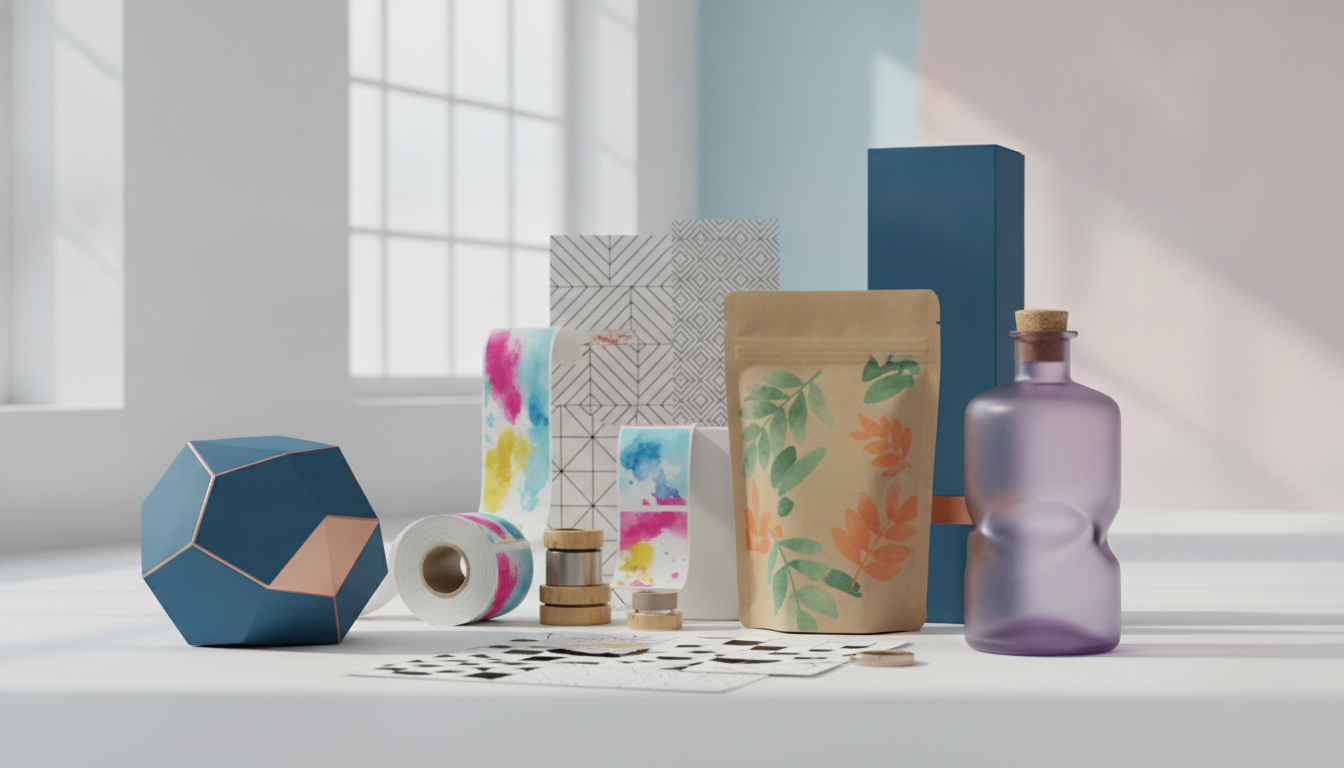
In today’s competitive market, how your items look can make a huge difference. A staggering 81% of consumers will choose a product based solely on its appearance. This highlights the importance of a strong visual strategy. You can truly transform your business by following effective packaging design methods that make your brand stand out.
This guide will help you navigate the intricate world of packaging, ensuring your offerings communicate your unique value to potential buyers. Whether you’re just starting out or you’ve been in the game for years, understanding the blend of aesthetics and functionality is vital for growth.
We will explore ways to create a cohesive identity that resonates with your audience while keeping a polished appearance. By focusing on key design principles, you can make sure your brand remains memorable and competitive among today’s discerning consumers.
Our aim is to equip you with the tools needed to create packaging that not only protects your items but also tells your captivating brand story.
Key Takeaways
- Visual appeal significantly influences consumer purchasing decisions.
- Effective packaging can elevate your brand’s identity.
- Understanding aesthetics and function is crucial for success.
- A cohesive design resonates with your target audience.
- Strong packaging tells a compelling brand story.
Understanding the Impact of Product Packaging
Your items’ visual appeal can significantly sway customer choices. In fact, a striking 81% of consumers will select a product based solely on its appearance. This emphasizes the critical role of effective packaging in your marketing strategy.
Effective packaging design serves as the first point of contact, influencing whether a customer picks up your item or walks right past it. When consumers see a well-crafted package, it creates an inviting experience that can lead to a purchase.
Moreover, a thoughtfully designed package does more than protect the contents; it shapes the entire consumer experience. From the moment of discovery to unboxing, your brand identity is reinforced every time a customer interacts with your packaging.
By prioritizing high-quality design, you can significantly increase the perceived value of your offerings. This allows you to justify a premium price point while building trust and encouraging long-term loyalty among your customers.
- Effective packaging serves as a crucial marketing asset.
- It shapes the entire consumer experience from discovery to unboxing.
- High-quality design reinforces brand identity and builds trust.
- Strong packaging can justify a premium price point.
- Understanding psychological impacts helps create emotional connections.
Defining Your Product, Audience, and Sales Channels
A clear grasp of your product and audience will guide your packaging choices. Before diving into the design process, it’s essential to pinpoint what your product is, who your target audience is, and where you plan to sell.
Conducting thorough market research helps you identify the specific needs and preferences of your customers. For instance, if your audience is older, your packaging might require larger text and higher contrast for better readability. In contrast, younger beauty consumers often look for bold visuals, while premium food customers may prefer a minimalist approach.
Analyzing your competitors also plays a vital role. It allows you to understand the standard expectations within your product category, ensuring your brand fits in while still standing out. Gather your brand assets, including logos and color codes, to maintain consistency across your overall business identity.
Lastly, understanding your sales channels is crucial. This knowledge enables you to tailor your packaging to meet the specific requirements of retail shelves or e-commerce shipping.
Building a Cohesive Brand Identity Through Packaging
Your packaging can narrate a compelling story about who you are as a brand. It acts as a physical extension of your brand identity, communicating your values and personality to every person who buys your product. This connection is crucial in today’s market.
Consistency is key. Ensure your colors, typography, and logo placement align perfectly with your website and social media marketing materials. When your packaging design feels cohesive, it builds trust with your customers and makes your business appear more professional and established.
Moreover, you can use your packaging to tell a story about your brand’s origins, mission, or values. This adds depth to your overall narrative and engages customers on a personal level. A strong brand identity helps you differentiate your offerings from competitors, making it easier for customers to recognize you on the shelf.
Every element of your design should reflect the promise your brand makes. This ensures that the unboxing experience matches the customer’s expectations. By maintaining a unified look, you reinforce your brand identity, which is essential for fostering long-term loyalty and repeat purchases from your audience.
For more insights on effective strategies, check out this guide on packaging design.
Exploring the Essentials of Packaging Design
The aesthetics of your packaging can create lasting impressions on consumers. It’s essential to strike a balance between how your items look and their practical functionality. Effective packaging design protects your items during transit while captivating your audience.
Consider how various design elements, such as color and typography, guide the consumer’s eye across the package. Using the right colors can evoke specific emotions—red for excitement or green for health—which influences your brand perception.
Your design elements should serve a clear purpose, whether providing essential information or creating a memorable visual impact. Remember, balancing beauty with utility means your packaging must be easy to open while still looking premium enough to justify the price.
Lastly, test your design elements in real-world scenarios to ensure they remain legible and attractive in both retail and online environments. By carefully selecting your colors and fonts, you create a harmonious look that reinforces your brand and makes your offerings stand out.
Product Packaging Design Tips for a Standout Look
Creating a striking appearance for your items is essential in today’s market. It’s not just about aesthetics; it’s about making a memorable impact. By following proven strategies, you can elevate your brand’s visibility and appeal.
One effective strategy is to tailor your packaging to the specific category, as demonstrated by Brio, who utilized Superside for their testing and lab equipment. This approach ensures that your packaging resonates with your target audience.
Embracing minimalism is also crucial. Avoid overwhelming visuals that can detract from your product. A clean, simple design allows your offerings to shine amid the clutter of competing brands.
Designing for extensibility is another smart move. This means you can adapt your packaging for new variations without starting from scratch. Always consider the use context; choose materials that withstand the environment where your items will be used.
Don’t forget about shelf impact. Use design hierarchy to draw attention to the most important information. Lastly, make your packaging user-friendly. An easy-to-open design enhances the unboxing experience, making it more enjoyable for your customers.
By implementing these strategies, you can create a standout look that captures the attention of your audience and boosts your sales.
Selecting the Right Materials for Your Packaging
The materials you select for your items can significantly impact their appeal and durability. Choosing wisely is essential, as it influences both the sustainability and the strength of your offerings.
Eco-conscious customers often prioritize brands that use recyclable or biodegradable materials. This choice can serve as a substantial marketing advantage for your business.
Evaluate the durability of your chosen material to ensure it protects your items during shipping and retail storage. The texture and finish, such as matte or glossy, also play a major role in how your brand is perceived by consumers.
Balancing the cost of high-quality materials with the value they add to your items is crucial for maintaining profit margins. If you are shipping fragile items, investing in robust materials is necessary to ensure safe delivery.
By opting for sustainable materials, you show your commitment to the environment. This resonates deeply with modern, socially responsible customers.
For more insights on essential materials for your business, check out this guide on e-commerce materials.
Harnessing the Power of Color, Typography, and Imagery
Color, typography, and imagery are powerful tools that can transform your brand’s identity. Using these elements effectively can make a significant difference in how customers perceive your offerings.
Creating Visual Impact with Color Psychology
Color psychology is a powerful tool in your design arsenal. Specific colors can trigger emotional responses that influence your customers’ buying decisions. For example, warm colors like red can evoke excitement, while cool colors like blue may inspire trust.
Effective Font and Imagery Choices
Select fonts that reflect your brand personality. Sleek sans-serif fonts work well for modern products, while handwritten styles suit artisanal goods. High-quality images are essential for creating a strong visual impact, helping consumers understand the features and benefits of your items.
Ensure your typography maintains a clear hierarchy. Make the product name the most prominent element on your packaging. Using consistent colors across all your elements helps build brand recognition, making it easier for customers to identify your offerings quickly.
Avoid low-resolution images, as they can appear blurry when printed. This negatively impacts the perceived quality of your brand. By carefully balancing your imagery and text, you create a cohesive design that effectively communicates your message to your target audience.
Designing for Different Sales Environments: E-commerce vs. Retail
In the realm of sales, understanding the environment where your items will be sold is crucial. Each channel—e-commerce and retail—has its unique requirements that can influence your strategy.
E-commerce packaging should focus on secure and efficient protection. This ensures that your items arrive safely at the customer’s door. Additionally, creating an intentional unboxing experience can build trust and encourage repeat orders from your audience.
On the other hand, retail packaging must prioritize shelf presence. Your design should be instantly recognizable, allowing customers to spot your items among numerous alternatives. This means your packaging must be visually appealing from a distance.
Moreover, consider the physical constraints of each sales environment. For instance, retail spaces have limited shelf space, while online sales require specific shipping dimensions. By grasping these unique demands, you can optimize your approach.
Your design should also be adaptable. Successful brands often create tailored versions for different sales channels, maximizing their impact. As a result, you can effectively reach your target audience while maintaining your brand’s core identity.
Innovative Structural and Format Considerations
Exploring new formats can elevate your brand’s visibility and functionality. Innovative structural choices can set your offerings apart. For instance, the VanMoof cycling company redesigned their box to resemble a TV, which helped reduce shipping damage.
Consider various packaging types like pouches, bottles, or custom-shaped boxes. Each option can provide unique benefits for your specific items. Collaborating with structural engineers can lead to unique solutions that align with your brand image while ensuring maximum protection.
The physical shape of your packaging affects how consumers interact with your items. Prioritize convenience and ease of use in your design. Don’t hesitate to think outside the box—unique structures can significantly reduce shipping damage incidents.
Your structural choices should reflect the quality of your brand. By investing in innovative formats, you can create a memorable experience that distinguishes your brand from competitors in a crowded marketplace.
Utilizing Minimalism to Boost Visual Appeal
A minimalist approach can significantly enhance the visual allure of your items. By using white space and clean lines, you create a modern look that resonates with customers, especially in the beauty and tech sectors.
Take Sheyn, an Austrian-based 3D homeware brand, for example. They effectively use simple Kraft mailer boxes to maintain a minimalist and eco-friendly aesthetic. This strategy not only aligns with their brand values but also attracts environmentally conscious consumers.
To achieve a minimalist design, avoid cluttering your packaging with too many fonts or images. This can lead to information overload for your audience. A streamlined approach often feels more premium, allowing you to justify a higher price point.
By focusing on essential design elements, you ensure that your brand message remains clear and impactful. Remember, minimalism is not about ignoring design; it’s about using every element intentionally to create a sophisticated and memorable experience.
Embracing Personalization and Storytelling in Packaging
Transforming your packaging into a canvas for your brand’s narrative can captivate your customers. Personalization adds a unique touch that makes each package feel special. For instance, including customer names or unique batch numbers can turn a generic package into a memorable experience.
Storytelling through your packaging allows you to communicate the “why” behind your brand. Sharing your values and mission can resonate deeply with your audience. Using custom illustrations or hand-painted textures adds a human touch that helps your items stand out from mass-produced alternatives.
Every aspect of your packaging should tell a story. From the materials you choose to the copy on your product label, consistency reinforces your brand identity. Incorporating unique branding elements creates a deeper emotional connection with your audience, fostering long-term loyalty.
Personalization doesn’t have to break the bank. Simple additions, like a handwritten thank-you note or a custom stamp, can make a huge difference. When your packaging tells a compelling story, it makes your offerings more memorable to your target audience.
Implementing a Seamless Design Process
Establishing a smooth design process is vital for ensuring your project transitions effortlessly from the initial idea to the final artwork. Experts like Piotr, the Director of Brand & Marketing Creative at Superside in Cracow, Poland, emphasize the importance of organization in this phase.
Start by gathering all necessary information about your items and brand assets. This foundational step sets the stage for a successful design journey. Next, prototyping becomes essential. It allows you to evaluate both the functionality and visual appeal of your concept before committing to large-scale production.
Testing your prototypes with focus groups can reveal layout issues or weak hierarchies that might otherwise lead to costly mistakes. Iterating on your design based on feedback ensures the final artwork aligns with your brand goals and customer expectations.
Collaboration between graphic designers and structural engineers is also crucial. This teamwork guarantees that your final design is not only visually stunning but also practical. By following a structured process, you minimize errors and ensure your final packaging is market-ready.
| Step | Description | Outcome |
|---|---|---|
| Gather Information | Collect all necessary product details and brand assets. | Foundation for design |
| Prototyping | Create a sample to test functionality and appeal. | Refined design |
| Testing | Use focus groups to gather feedback on prototypes. | Identified issues |
| Iteration | Adjust the design based on feedback. | Finalized artwork |
| Collaboration | Work with engineers for practical solutions. | Functional design |
Ensuring Print-Ready Files and Production Accuracy
Ensuring your files are ready for print is a crucial step in the production process. Before you send your files to the printer, confirm they are print-ready. This includes checking the correct dielines, color codes, and bleed areas.
Using the wrong file format can lead to pixelated images. Always provide vector files for your logo to ensure crisp, clear printing. Additionally, double-check all legal information, such as barcodes and ingredient lists, to ensure compliance with industry regulations.
Proper file preparation may not be glamorous, but it is essential for avoiding costly production errors for your business. Always confirm that your color profiles, such as CMYK or Pantone, are set correctly. This ensures the final print matches your digital design.
Finally, work closely with your printer to understand their specific requirements. This collaboration ensures your material and artwork are perfectly aligned for production. By maintaining high standards for your print-ready files, you guarantee that your final packaging looks professional and reflects your brand quality.
- Ensure files are print-ready with correct dielines and bleed areas.
- Provide vector files to avoid pixelation.
- Double-check legal information for compliance.
- Confirm color profiles for accurate printing.
- Collaborate with your printer for best results.
Managing Budget and Production Efficiency
Effective management of your budget is essential for maximizing your business potential. Understanding both fixed costs, like design work, and variable costs, such as the price of materials, is crucial. This clarity helps you make informed decisions that align with your financial goals.
To optimize production efficiency, consider using standard box sizes or labels that can be applied across multiple items. This approach not only saves time but also reduces costs.
Balancing Cost with Quality
Striking a balance between cost and quality is vital. Investing a bit more in premium materials can significantly enhance the perceived value of your offerings. Additionally, developing a comprehensive budget that covers every stage—from initial design to final shipping—ensures no detail is overlooked.
Value engineering is another strategy to explore. It allows you to find cost-effective solutions without sacrificing the overall quality of your brand. By planning your production scale carefully, you can take advantage of bulk pricing, ultimately saving money in the long run.
Always keep your budget in mind during the design process. This awareness will guide your decisions regarding custom versus stock options, ensuring you stay within your financial limits.
| Budget Aspect | Description | Impact |
|---|---|---|
| Fixed Costs | Costs that remain constant, like design work. | Predictable expenses |
| Variable Costs | Costs that fluctuate, such as materials. | Flexible budgeting |
| Production Efficiency | Using standard sizes and labels. | Cost savings |
| Quality Investment | Choosing premium materials. | Enhanced product value |
| Value Engineering | Finding cost-effective solutions. | Maintained quality |
Adapting Packaging Design for Seasonal and Cultural Trends
Incorporating seasonal elements into your visuals can drive urgency and excitement among your customers. Adapting your packaging for holidays can create a sense of immediacy, boosting sales for your items. For instance, using festive colors and imagery during the holiday season can make your offerings more appealing.
It’s also essential to be mindful of cultural differences when selecting colors and visuals. These elements can carry different meanings across regions, so understanding your audience is crucial. Limited-edition designs can keep your brand fresh and exciting throughout the year, engaging existing customers.
When updating your packaging for seasonal themes, ensure you maintain your core brand identity. This helps customers recognize your items even with temporary changes. Using elements like stickers or custom sleeves allows you to refresh your look without a complete redesign.
Always keep your print files organized to easily bring back successful seasonal designs in future years. By staying aware of cultural and seasonal trends, you ensure your brand remains relevant and engaging to your target audience at all times.
Conclusion
In today’s market, the way your items look can be a game-changer in capturing consumer interest. Creating effective packaging strategies combines creativity with a deep understanding of your audience and business goals. Tools like VistaCreate and VistaPrint make it easier for small businesses to create professional-quality visuals without needing extensive design skills.
Remember, your packaging serves as a powerful marketing tool that tells your brand story and influences purchasing decisions. By focusing on clarity, functionality, and consistency, you can craft a memorable unboxing experience that fosters loyalty and repeat sales.
Always start with your customers and sales channels in mind, ensuring your design communicates value immediately. Don’t hesitate to evolve your approach over time, as responsiveness to trends and feedback will help your brand thrive. With the right mindset and creativity, your packaging can do far more than just protect your items; it can truly help your brand pop.