
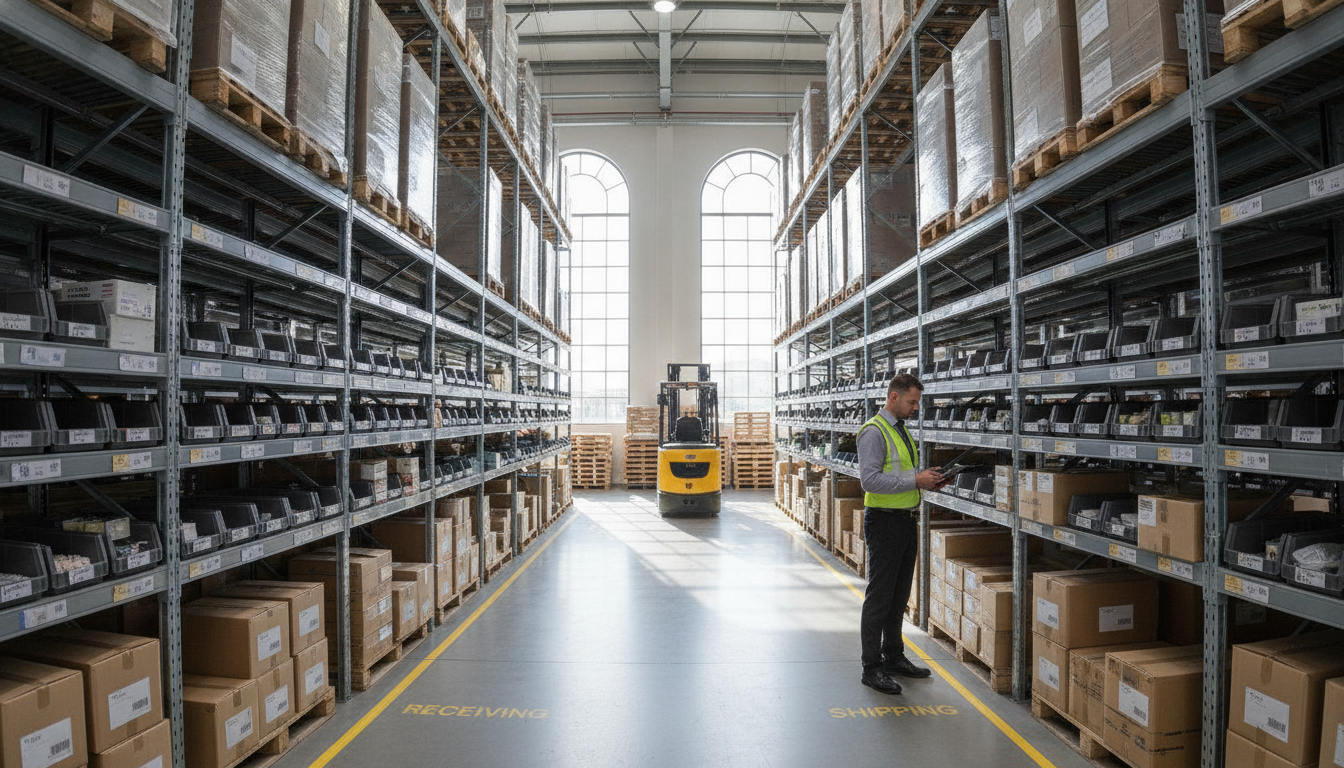
As eCommerce continues to grow, businesses face a pressing challenge: managing their space effectively. By 2025, an additional 330 million square feet will be needed to keep up with this rapid expansion. This makes it essential to rethink how you utilize your facility.
Implementing effective strategies is vital for maintaining a competitive edge. Transforming your space can lead to better inventory management and overall efficiency. This guide will provide you with actionable steps to optimize your area, ensuring it meets your operational needs.
Focusing on small, manageable changes can yield significant results. You can create a streamlined environment that enhances productivity and serves your customers better. Let’s dive into practical solutions that can help you achieve these goals.
Key Takeaways
- Consider your space as the foundation of your business.
- Effective strategies are essential for growth.
- Actionable steps can transform your facility.
- Optimizing space leads to immediate and long-term benefits.
- Small changes can create a more efficient environment.
Defining Your Warehouse Organization Goals
Before diving into improvements, it’s crucial to establish your goals for space management. Research from the Princeton University Neuroscience Institute shows that visual clutter can overload the brain, distracting your team from their tasks. A chaotic environment can severely impact your business’s efficiency and your staff’s ability to focus.
Identifying specific objectives for your space is essential. This ensures that every change you make contributes to a safer and more productive atmosphere. Understanding how your physical space affects your team’s performance is the first step toward fostering a culture of order and high efficiency.
By setting clear goals, you can effectively measure the success of your organizational efforts. This alignment keeps your team focused on the company vision and enhances overall productivity.
Evaluating Your Current Warehouse Layout
Analyzing your existing space is the first step towards improving functionality. A streamlined layout can enhance efficiency and reduce unnecessary movement. To achieve this, you should focus on creating a direct flow from receiving to shipping.
Start by evaluating your current layout. Draw a line from where inventory enters to where it exits. This visual can help identify potential bottlenecks. A well-designed layout ensures that your floor space is utilized effectively, allowing your team to work without obstacles.
Safety and access are crucial. Ensure aisles remain clear for moving vehicles, and all staff can reach items without strain. Engaging your employees in this evaluation process can uncover hidden inefficiencies that management might overlook.
Ultimately, a logical layout reduces the time spent moving products. This improvement directly boosts the overall productivity of your operations and daily fulfillment tasks.
Streamlining Inventory Management for Better Control
Managing your inventory effectively is key to ensuring smooth operations. Streamlining your inventory management is essential for maintaining control over the thousands of items that move through your facility daily.
Implementing a robust system provides real-time visibility into stock levels. This prevents the common errors associated with manual tracking methods. Proper management ensures your team knows exactly where products are located, reducing time spent on searches.
By integrating a reliable inventory management approach, you can align stock levels with customer demand. This helps avoid the pitfalls of overstocking. Consistent monitoring allows you to identify slow-moving items and adjust your storage strategy to maximize your facility’s utility.
| Feature | Benefit | Impact |
|---|---|---|
| Real-time Tracking | Immediate stock visibility | Reduces errors |
| Automated Alerts | Prevents stockouts | Improves service levels |
| Data Analytics | Identifies trends | Enhances decision-making |
Optimizing Storage Capacity and Floor Space Utilization
Maximizing storage capacity is essential for businesses looking to optimize their available space. Mark Dunaway, President of Americas at Kardex Remstar, emphasizes that utilizing vertical storage is a win-win for companies facing space constraints.
You can calculate your storage capacity by multiplying height, width, and depth. This will help you determine if you are effectively using your available space. If your shelves are not fully utilized, you may be paying to store air, wasting valuable floor space.
By optimizing your storage methods, you can house more products within your existing footprint. This approach delays the need for costly facility expansions or relocations. Reviewing how your inventory is stored can reveal opportunities to implement vertical solutions that dramatically increase your total storage capacity.
| Storage Method | Benefit | Impact on Space |
|---|---|---|
| Vertical Racking | Maximizes height | Increases capacity |
| Modular Shelving | Flexible configurations | Adapts to needs |
| Stackable Bins | Efficient use | Reduces footprint |
Simple Tips: Labels, Signage, and Maps for Clarity
A well-structured system of signs and labels can transform the way your team operates. Implementing clear signage is one of the easiest ways to keep your space organized. Large, bold signs throughout your facility will guide staff to the correct aisles and stations, reducing confusion and operational errors.
Providing maps at each entry point is crucial. These maps help new employees navigate the area quickly, similar to those in large shopping malls. This feature significantly reduces lost time, especially for seasonal staff members.
Additionally, detailed labels on all inventory items ensure that your team can identify products instantly. This saves valuable time during the picking and packing process. Regularly updating your signage and maps keeps your environment clear and navigable as your inventory needs evolve.
| Signage Type | Purpose | Benefit |
|---|---|---|
| Directional Signs | Guide staff | Reduces confusion |
| Inventory Labels | Identify items | Saves time |
| Facility Maps | Navigate easily | Enhances efficiency |
Practical “warehouse organization ideas” for Enhanced Efficiency
Transforming your workspace into a well-organized area can significantly improve your operations. One effective approach is to use stackable bins and trays that are clearly labeled. This method ensures that small items have designated homes, reducing clutter and confusion.
Enhancing efficiency often comes down to simple changes. Make sure every tool and supply has a clearly labeled location. This straightforward adjustment can boost your team’s productivity by minimizing the time spent searching for supplies.
Implementing these small-scale strategies creates a more professional environment. It supports the daily operations of your entire staff. By standardizing how you store small items, you also create a consistent process. This makes it easier for new employees to learn their roles quickly.
| Storage Solution | Benefit | Impact on Efficiency |
|---|---|---|
| Stackable Bins | Organizes small items | Reduces clutter |
| Clearly Labeled Areas | Improves location tracking | Speeds up retrieval |
| Standardized Processes | Facilitates training | Enhances productivity |
For more insights on optimizing your shipping process, check out this resource.
Enhancing Warehouse Safety and Cleanliness
Safety and cleanliness are critical aspects of maintaining an efficient workspace. When you prioritize these elements, you create an environment where employees can thrive. Regular maintenance and cleaning routines play a significant role in achieving this goal.
Nate St. Pierre, Director of Service at Kardex Remstar, emphasizes that keeping your equipment in safe working order is essential. This not only prevents costly downtime but also protects your bottom line.
Establishing regular cleaning routines is vital. This practice helps prevent accidents caused by spills or debris on the floor. Training your employees to maintain a clean workspace directly contributes to a safer and more productive environment.
Additionally, conducting regular safety audits allows you to identify potential hazards before they lead to injuries. This ensures that your facility remains compliant with industry standards. A clean and safe workspace reflects your commitment to your employees, improving morale and reducing turnover rates.
| Focus Area | Importance | Benefit |
|---|---|---|
| Regular Maintenance | Ensures safety | Prevents downtime |
| Cleaning Routines | Reduces accidents | Enhances productivity |
| Safety Audits | Identifies hazards | Improves compliance |
Leveraging Technology with Warehouse Management Systems
In today’s fast-paced business environment, using technology is essential for optimizing your operations. A warehouse management system (WMS) provides the real-time data you need to track inventory movement effectively. This system enhances the functionality of your entire facility.
Here are some key benefits of integrating a modern management system:
- Visibility: A WMS offers insight into your inventory levels and operator performance statistics.
- Centralized Tracking: It acts as the brain of your operations, tracking every item from arrival to shipping.
- Process Automation: Automate complex tasks that are prone to human error, increasing efficiency.
- Data-Driven Decisions: Access historical data to make informed choices about future storage and staffing needs.
- Long-Term Investment: Consider this system as an investment that pays off by reducing errors and boosting throughput.
By leveraging a robust management system, you can streamline your processes and enhance your operational efficiency.
Classifying and Slotting Inventory to Boost Productivity
To enhance productivity in your operations, it’s vital to classify your inventory effectively. By using the ABC analysis method, you can prioritize your most popular SKUs for faster picking. This ensures that your fastest-moving products are easily accessible.
Slotting these items in zones closest to your shipping area can significantly reduce travel time for your team. Proper slotting not only optimizes your picking processes but also impacts the speed and accuracy of your order fulfillment.
Analyzing the velocity of your products allows you to make data-driven decisions about placement. This minimizes physical strain on your employees, enhancing their overall efficiency. Regularly reviewing your slotting strategy is essential, as product popularity can shift with seasonal trends and marketing campaigns.
Automated Storage Solutions for Maximum Space Utilization
In a competitive market, finding ways to maximize your space is essential. Automated storage solutions are a game-changer for businesses looking to enhance their efficiency. According to Cal Bowers, Sr. Director of New Business at Kardex Remstar, these systems allow you to hold more inventory without sacrificing your limited space.
For instance, Modula’s automated storage systems can save up to 90% of your floor space. This means you can nearly double your current storage capacity. The Modula Slim is particularly noteworthy; it takes up only 32.29 square feet, making it ideal for smaller facilities.
These advanced systems can achieve up to 550 withdrawals per hour per station. This significant boost in productivity can greatly enhance your picking and packing teams’ efficiency. Moreover, investing in these solutions eliminates the need for forklifts, reducing the physical effort required by your staff.
| Feature | Benefit | Impact on Space |
|---|---|---|
| Automated Systems | Increased inventory capacity | Maximizes available space |
| Modula Slim | Compact design | Ideal for small areas |
| High Withdrawal Rate | Boosts productivity | Improves operational efficiency |
Improving Receiving and Returns Processes
Efficient handling of incoming shipments and returns is crucial for smooth operations. By optimizing these processes, you can enhance your overall workflow and maintain order in your space.
Streamlining your receiving procedures ensures that incoming inventory is processed and stored immediately. This prevents clutter at your loading docks and allows for a more organized environment.
Streamlining Receiving Procedures
Assigning a dedicated employee to manage your receiving area is essential. This ensures that every shipment is verified for accuracy and condition before it enters your inventory. According to Christina Dube, Marketing Director at Kardex Remstar, leveraging automation for returns is a game changer for maintaining stability during peak periods.
Documenting Effective Returns Handling
Documenting your returns handling processes is vital. This practice ensures that your employees know exactly how to inspect and restock items without losing money. By improving these two critical processes, you can prevent the accumulation of disorganized boxes and maintain a smooth flow of goods through your facility.
For more insights on mastering shipping and logistics, check out this resource.
Engaging Employees for Continuous Process Improvement
Fostering a culture of continuous improvement is essential for any thriving business. One effective way to achieve this is by actively engaging your team in the process. Regular training sessions can remind your employees of the importance of maintaining an organized space and instill a sense of accountability.
Here are some ways to involve your staff in enhancing operations:
- Identify Pain Points: Involve your employees in discussions about their daily tasks. They can highlight areas that need improvement and suggest practical solutions.
- Offer Continuing Education: Providing opportunities for skill development encourages employees to take on more responsibilities, which can lead to greater job satisfaction.
- Listen to Feedback: When you pay attention to your team’s insights, you learn what they need to perform their work more effectively and safely.
- Conduct Regular Check-Ins: Walk through the space with your team to observe processes in action. This allows you to give constructive feedback in a supportive manner.
- Empower Your Team: A culture of continuous improvement ensures that your facility remains organized and efficient, as your staff feels empowered to suggest and implement changes.
By engaging your employees in these ways, you create a collaborative environment that promotes operational efficiency and enhances overall productivity.
Analyzing the Impact of Warehouse Organization on Business Success
The way you structure your workspace can significantly influence your business outcomes. A case study by Public Health England found that companies enhancing their physical setups improved brand image and cut costs. This shows that better space utilization leads to tangible benefits.
For instance, the partnership between Spigen and Extensiv illustrates how effective organization and technology can reduce inventory errors. This collaboration enhances overall business success.
Research confirms that increased visibility into your inventory through improved organization allows for smarter decision-making. This directly impacts your bottom line and boosts customer satisfaction.
Moreover, by minimizing errors in your fulfillment process, you create a more reliable experience for your customers. This reliability is essential for long-term business growth.
Lastly, analyzing the impact of your organizational efforts helps justify further investments in technology and training. These investments are crucial for keeping your workspace performing at its peak.
| Aspect | Benefit | Impact |
|---|---|---|
| Visibility | Better decision-making | Increased customer satisfaction |
| Reduced Errors | Reliable fulfillment | Long-term growth |
| Workspace Utilization | Cost savings | Improved brand image |
Conclusion
Creating a well-structured environment is essential for maximizing your operational capabilities. Achieving a high level of space management requires a commitment to consistent processes and regular maintenance.
By starting with small, actionable steps, you can see immediate improvements in your daily productivity and the overall efficiency of your facility. Remember, your inventory management and storage systems are the heart of your business, deserving your ongoing attention.
Engaging your employees and fostering a culture of safety will ensure that your space remains productive and enjoyable to work in. We encourage you to review your current operations today and take the first step toward a more organized and successful future.